
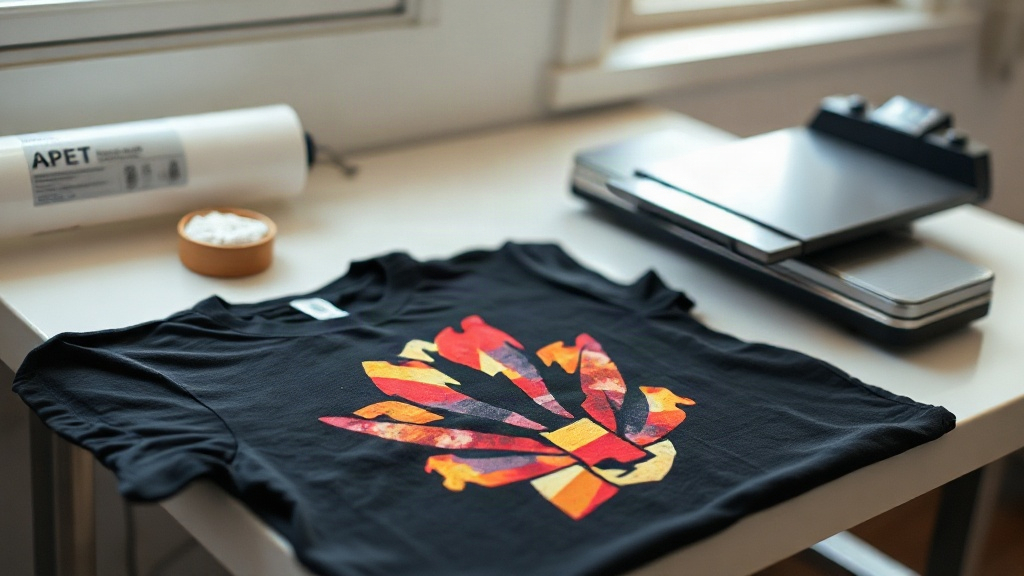
Walk into any custom apparel shop today and you will notice something different on the workbench. Alongside the vinyl cutters and screen printing frames sits a small roll of film and a shaker of adhesive powder. DTF Transfers have moved from a niche curiosity to a staple tool for decorators who need full-color prints without the setup costs of traditional methods. The appeal is simple: print a design onto a special film, coat it with powder, and press it onto almost any fabric. No color separation, no minimum order, no screens to burn. But the simplicity of the concept hides a process with real variables that decide whether your print survives fifty washes or peels after three. This guide breaks down how the technology actually works, where it shines, and how to get consistent results.
What Are DTF Transfers and How Do They Work?
Direct-to-film printing is a digital process that transfers a printed image onto a textile using heat and pressure. Instead of printing directly onto a garment, the design is printed onto a PET film coated with a release layer. The printer lays down white ink first, followed by CMYK color, and the white ink acts as an opaque base so colors stay vivid on dark garments. After printing, a thermoplastic adhesive powder is applied to the wet ink and cured. The result is a flexible, stretchable transfer that can be stored and pressed later.
The key difference from direct-to-garment printing is the transfer step. DTG prints straight onto the fabric, which limits it mostly to cotton. DTF decouples printing from the garment, so you can decorate cotton, polyester, blends, canvas, and even leather or nylon with the same output. That flexibility is why many shops now keep a DTF printer next to their other equipment.
The Three Layers of a DTF Print
Understanding the structure helps you troubleshoot problems later. A finished transfer has three functional layers:
- Release film: the carrier that holds the print until pressing. It must release cleanly without tearing the image.
- Ink layer: white base plus CMYK color, formulated to be flexible when cured.
- Adhesive powder: a hot-melt glue that bonds the ink to the fabric under heat.
If any layer is off, the print fails. Weak powder coverage causes peeling. Over-cured ink cracks. Cheap film leaves residue on the garment. Most DTF problems trace back to one of these three.
Why DTF Transfers Are Gaining Ground
The technology is not perfect for every job, but it solves several problems that have frustrated decorators for years.
No Color Limits and No Setup Costs
Screen printing requires a screen for every color, which means setup time and cost. DTF prints a full-color photograph or gradient in a single pass. For short runs, samples, or one-off custom orders, that is a major advantage. You can print one piece or fifty without changing your process.
Works on Hard-to-Print Fabrics
Polyester is the classic headache for DTG because the fabric dyes can bleed into the print. DTF sidesteps this because the ink never touches the fabric until pressing, and the white base blocks bleed-through. Nylon, canvas, and blended hoodies also press cleanly, which opens up product lines that were previously off-limits.
Storage and On-Demand Pressing
Printed transfers can be stored for months if kept cool and dry. That means you can print during slow hours and press during busy ones, or ship transfers to a partner who only owns a heat press. This decoupling is a genuine workflow advantage for growing shops.
Choosing the Right Film, Powder, and Ink
The market has expanded quickly, and not all supplies are equal. Here is what to look for.
Film
Look for double-sided matte PET film designed specifically for DTF. Thickness around 75 to 100 microns is common. Thinner film can wrinkle during printing; thicker film may not release evenly. Always test a new roll before committing to a large order.
Powder
TPU-based adhesive powder is the standard. Particle size matters: finer powder (around 80 to 200 microns) gives smoother hand feel and better detail on small text, while coarser powder bonds more aggressively on heavy fabrics. Many shops keep both on hand.
Ink
Use DTF-specific pigment ink, not DTG ink. DTF ink is formulated to sit on film and to accept powder. Mixing ink types is one of the most common causes of poor adhesion and dull color.
Press Settings That Actually Work
Heat press settings are where most beginners struggle, because the right numbers depend on your equipment and fabric. Use these as a starting point, then adjust.
- Temperature: 160 to 170 degrees Celsius (320 to 340 Fahrenheit) for most fabrics.
- Pressure: medium to firm. You want the powder to melt into the fabric weave, not just sit on top.
- Time: 10 to 15 seconds for the transfer, then peel.
- Peel: cold peel for most films. Let the transfer cool for a few seconds before removing the film.
After peeling, many decorators press again for 5 to 10 seconds with a cover sheet to smooth the print and improve wash durability. This second press is optional but recommended for stretchy fabrics.
Adjusting for Tricky Fabrics
On stretchy polyester, lower the temperature slightly and shorten the press to avoid scorching. On heavy canvas, increase pressure and time. On nylon, test a scrap first because some coatings react badly to heat. There is no universal setting; a scrap bin and a notebook are your best tools.
Common Problems and How to Fix Them
Even experienced operators run into issues. Here are the usual suspects and the fixes.
Peeling After Washing
Usually caused by insufficient powder, uneven pressure, or pressing on a fabric with a finish or softener. Pre-press the garment for a few seconds to remove moisture, and make sure powder coverage is even before curing.
Cracking or Fading
Often the result of over-curing the ink during the powder melt stage. Reduce time or temperature slightly, and verify your oven or heat source is consistent across the film.
Dull Colors on Dark Garments
This points to a thin white base. Increase white ink density in your RIP settings and confirm the white layer is fully opaque before color is printed.
Wash Durability: What to Expect
A properly produced DTF transfer should survive 50 or more home wash cycles when the garment is washed inside out in cold water and tumble dried low. Aggressive washing, hot water, and direct ironing on the print will shorten its life. Communicating care instructions to your customers is part of delivering a quality product, and it reduces returns.
Frequently Asked Questions
Can DTF transfers be applied to 100% polyester?
Yes, and this is one of the main reasons decorators adopt the method. The white ink base prevents dye migration, which is a common problem with DTG on polyester. Use slightly lower temperature and test a scrap first, since some polyester finishes are heat-sensitive.
How long can I store printed DTF transfers before pressing?
Stored in a cool, dry place away from direct sunlight, most transfers keep well for six months or longer. Humidity is the main enemy because it can affect the powder layer. Seal them in a bag with a desiccant if you live in a humid climate.
Do I need a special heat press for DTF?
A standard heat press with accurate temperature and adjustable pressure works fine. What matters is consistency: a press that holds temperature and applies even pressure across the platen will outperform an expensive press that runs hot spots.
What is the difference between DTF and DTG printing?
DTG prints directly onto the garment and is largely limited to cotton. DTF prints onto film first, then transfers to the fabric, which allows it to work on cotton, polyester, blends, and many other materials. DTF also stores well, so printing and pressing can happen at different times.
Why is my DTF print stiff or rubbery?
Too much powder or excessive pressure is the usual cause. Use finer powder for detailed designs, shake off excess powder thoroughly before curing, and avoid pressing so hard that the adhesive spreads beyond the image. A light second press with a cover sheet also helps soften the hand feel.
Final Thoughts
DTF printing rewards patience and testing more than expensive equipment. Once you dial in your film, powder, and press settings for the fabrics you use most, the process becomes reliable and fast. The flexibility to decorate almost any material, combined with the ability to store transfers and press on demand, makes it a practical addition to any custom apparel operation. Start with a small set of supplies, keep notes on every test, and let your scrap bin teach you the limits of your setup. That is how you turn a promising technology into a dependable part of your business.